










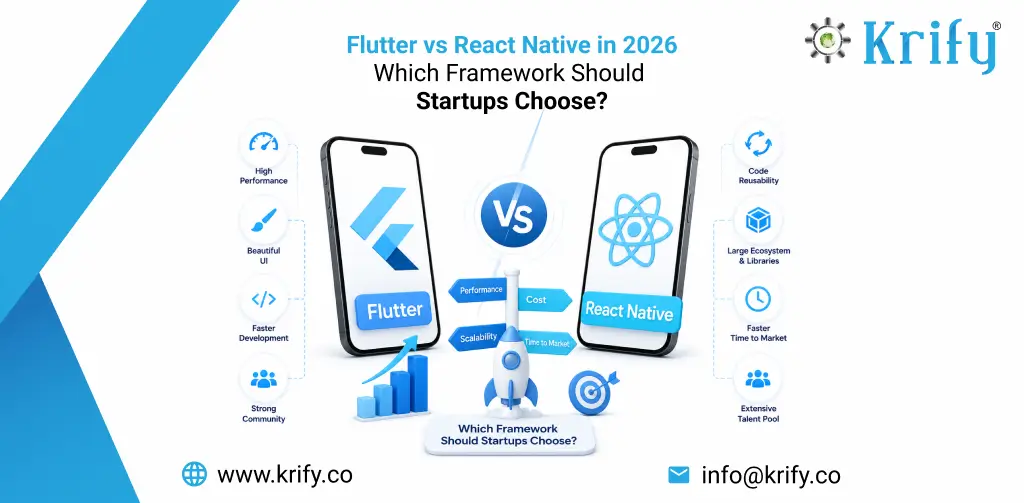
You’ve probably already spent hours down this rabbit hole. You’ve read Reddit threads, watched YouTube comparisons, and skimmed a dozen developer blogs debating widget rendering and bridge architecture. Yet you’re still no closer to a decision. Instead, you’ve simply realized how much time you’ve spent on a question that was never yours to answer alone.
Here’s the truth that many technical comparisons miss. As a founder, choosing between Flutter and React Native isn’t your biggest decision. The real challenge is deciding how to approach Cross Platform App Development for Startups as a whole. The framework is only one part of a much bigger equation.
Why This Question Keeps Founders Stuck
If you’re reading this, chances are you’ve hit one of these walls:
- A developer on your team has a strong opinion, but you’re not sure if it’s based on what’s best for your product or what they personally prefer to code in
- You’ve gotten quotes from agencies that differ wildly in price and timeline, and you don’t know if that’s because of framework choice or something else entirely
- You’re worried that picking “wrong” now means an expensive rebuild in 18 months when you need to scale
- You just want to ship an MVP and start getting user feedback, but this decision is holding up everything else
None of these are framework problems. They’re Cross Platform App Development for Startups problems — and they need to be solved with your business goals as the starting point, not a technical spec sheet.
What Actually Matters More Than “Which Framework Is Better”
Both Flutter and React Native are mature, capable, production ready technologies in 2026. Neither one is going to be the reason your startup fails or succeeds. What will make or break your launch is:
- Speed to market — how fast can a team actually build and ship your MVP, regardless of which framework they use?
- Cost predictability — will you get hit with scope creep and hidden costs three months in?
- Scalability — can this codebase support your app when you go from 500 users to 50,000?
- Team expertise — is the team building your app actually senior in the framework they’re recommending, or are they learning on your dime?
This is exactly why smart founders stop trying to make this decision in isolation and instead look for a partner who specializes in Cross Platform App Development for Startups someone who’s shipped both Flutter and React Native apps at your stage, and can tell you honestly which one fits your product, budget, and timeline.
The Real Risk Isn’t Choosing the “Wrong” Framework
The real risk is choosing the wrong team. Here’s why:
- Startups rarely fail because they picked Flutter when they should have picked React Native, or vice versa
- They fail because they hired a team that didn’t understand their business model, didn’t plan for scale, or disappeared halfway through development
- A skilled team can build a fast, scalable, beautiful app in either framework
- An inexperienced one can produce a slow, buggy, expensive mess in both
That’s the part of this decision that actually deserves your attention as a founder making sure whoever builds your app understands Cross Platform App Development for Startups as a discipline, not just a coding task.
So, Which Should You Choose?
Here’s the honest, founder level answer: it depends on a few things only you can weigh:
- Your specific product and its long term feature roadmap
- Your team’s existing technical expertise
- Your budget and how much room it has for flexibility
- Your growth plans and how fast you expect to scale
A five minute framework comparison article including this one can’t make that call for you responsibly. A short conversation with people who’ve built both can make the decision much easier. They can review your product requirements and recommend the path that gets you to market faster, at a lower cost, and with less risk of a costly rebuild later.
If you’re stuck weighing Flutter against React Native and losing time you don’t have, let’s skip the back and forth. Book a free consultation with our team, and we’ll walk you through exactly which approach fits your startup — no generic advice, just a clear recommendation based on what you’re actually building.