






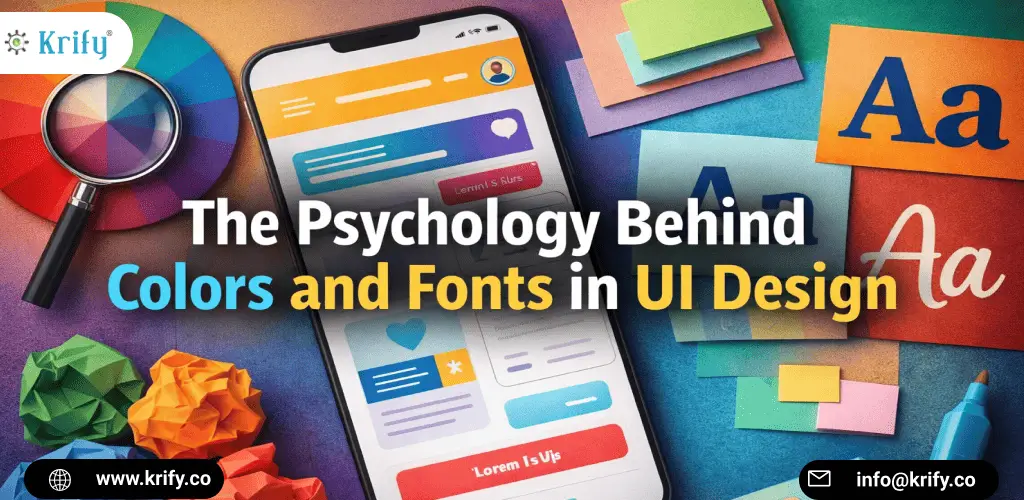
When people talk about UI Design Psychology, they often focus on what looks good. Nice colors, trendy fonts, clean layouts. However, anyone who has worked on real products knows there’s more going on. UI Design quietly shapes how users feel the moment they open an app or website. At Krify, we’ve noticed that even small visual changes can shift user behavior in ways teams don’t expect. Moreover, users rarely explain why something feels right or wrong—they just react.
Design choices aren’t just visual preferences. Instead, they affect comfort, trust, and how easily users move through an interface.
UI Design Psychology and First Reactions
First reactions happen fast. Sometimes almost instantly.
When a screen loads, users notice colors and fonts before anything else. A soft color palette might feel calm. A loud one can feel stressful. Similarly, clean fonts feel easy, while overly decorative fonts can slow people down. As a result, users decide whether they’re comfortable before reading a single line.
If something feels confusing, people usually don’t analyze it. They just leave.
How Colors Shape Emotions Without Saying a Word
Colors influence mood more than we like to admit.
Blue often feels safe. Green feels balanced. Red can feel urgent. But there’s no universal rule. Context matters. A color that works perfectly for a finance app might feel wrong in a wellness product.
In addition, cultural background changes how colors are interpreted. That’s why choosing colors based only on personal taste is risky. At Krify, we’ve seen interfaces improve simply by calming the color palette, even when nothing else changed.
Fonts Affect How Seriously Users Take Content
Fonts don’t just show text. They communicate tone.
A clean sans-serif font usually feels modern and approachable. Serif fonts feel more traditional. Playful fonts can feel friendly, but they can also feel unprofessional if used too much.
More importantly, readability matters. When users struggle to read, frustration builds quickly. Even strong content loses impact when typography gets in the way.
Consistency Helps Users Relax
People like knowing what to expect.
When colors and fonts stay consistent, users feel oriented. When styles change suddenly, even small shifts can feel uncomfortable. Therefore, consistency reduces mental effort and makes navigation feel easier.
Over time, consistent design also builds familiarity. Users start associating certain visual patterns with reliability.
Trust Is Influenced by Visual Comfort
Trust isn’t only built through words.
If an interface feels cluttered, mismatched, or visually noisy, users hesitate. On the other hand, calm layouts with thoughtful color and font choices feel more trustworthy. As a result, users are more willing to sign up, share details, or continue using the product.
This reaction is subtle, but it matters.
Accessibility andUI Design Psychology Are Closely Linked
Good design should work for everyone.
Low contrast, small fonts, or poor spacing exclude users without intention. However, when accessibility improves, overall usability improves too. Clear fonts and readable colors benefit everyone, not just specific groups.
Design that respects accessibility often feels more comfortable overall.
Small Design Tweaks Can Change User Behavior
Not every improvement requires a redesign.
Sometimes adjusting a font weight or changing a background color makes an interface feel easier. Consequently, engagement improves even though functionality stays the same.
At Krify, we’ve seen small UI adjustments reduce bounce rates simply by making screens feel less tiring.
Conclusion
Colors and fonts influence how users feel long before they think about features. UI Design Psychology reminds us that good interfaces work with human behavior, not against it. When designers pay attention to emotion, comfort, and clarity, products become easier to use and easier to trust. If you’re refining an interface or planning a new one, Contact us to see how Krify can help you design experiences that feel natural and human.