




Most apps don’t break because of one big mistake. What usually happens is quieter than that. Small issues appear, get ignored, and slowly stack up. Over time, those small things start affecting real users. From what we’ve seen at Krify, many of these problems could have been avoided with steady App Support. It’s not only about fixing bugs when something crashes. It’s more about keeping an app healthy while it’s being used every day. When apps are left alone after launch, even minor issues can turn into real headaches. If your app already feels unreliable or outdated, you can always contact us to talk through what’s happening.
Apps don’t live in a fixed environment. Phones change. Operating systems update. User behavior shifts. Because of that, treating an app as “finished” is usually where problems begin. Regular support gives teams a chance to react early instead of scrambling later.
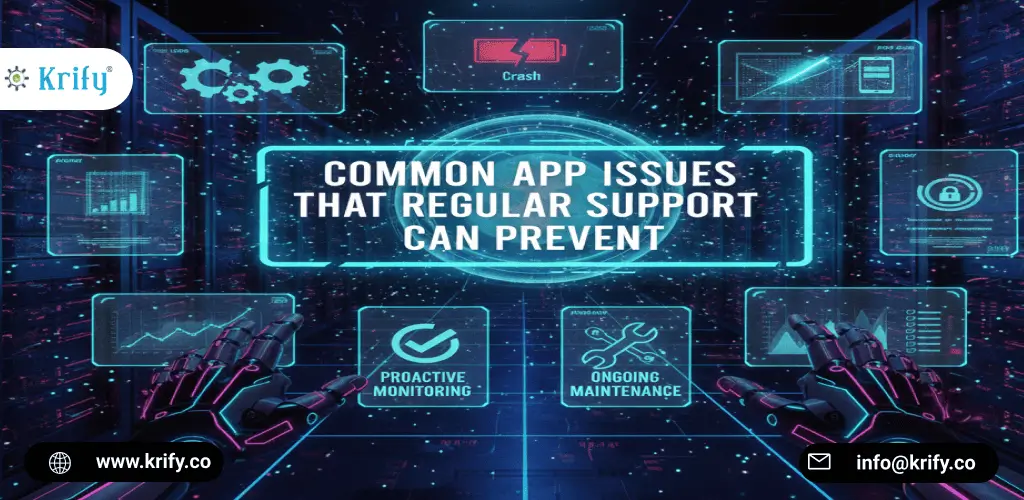
Common App Issues That Regular Support Can Prevent
1. App Crashes After Updates
Operating system updates come regularly, whether teams are ready or not. An app that worked fine last week can suddenly crash after users update their phones. This happens more often than people expect. With ongoing support, teams notice these changes early and fix issues before angry reviews start showing up.
2. Performance Slowdowns
Apps rarely slow down overnight. Instead, they get heavier little by little. Data grows. Background processes increase. Code that once worked fine starts struggling. As a result, users feel lag without knowing why. Regular support helps catch these patterns early and keeps performance from slipping.
3. Login and Authentication Problems
Login issues frustrate users quickly. Security rules change. Tokens expire. Backend updates affect authentication flows. Without regular checks, users may suddenly be locked out of their accounts. App support helps spot these issues before they turn into support tickets and lost users.
4. Broken Features
Third-party services don’t stay the same forever. APIs update. External tools change how they behave. When this happens, features can quietly stop working. Without support, these issues often go unnoticed until users complain. Regular checks help catch them sooner.
Best Practices for Ongoing App Support
1. Monitor the App Regularly
Looking at crash reports, logs, and basic usage patterns helps teams see problems forming before they grow. Most issues give warning signs if someone is paying attention.
2. Update Dependencies on Time
Outdated libraries and SDKs create hidden risks. Keeping them updated reduces compatibility issues and unexpected failures after system changes.
3. Test After Every Change
Even small changes can break something unrelated. Simple regression testing after updates helps avoid surprises later.
4. Listen to User Feedback
Users often notice issues before tools do. Reviews and support messages can reveal problems that automated monitoring misses.
Key Practical Points
- Fix problems before users complain
- Keep libraries and APIs up to date
- Watch for crashes and freezes
- Improve performance gradually
- Reduce security risks
- Keep the app feeling stable
These habits don’t feel dramatic, but they prevent bigger issues later.
How Krify Handles Regular App Support
At Krify, support isn’t treated as a one-time task. It’s ongoing. Teams regularly review app behavior, apply updates, and test changes. This steady approach helps prevent sudden breakdowns and keeps apps reliable as expectations grow.
Conclusion
Most app issues don’t appear all at once. They build up slowly when apps are left without care. Regular App Support Developer helps prevent crashes, slowdowns, broken features, and security gaps before users feel the impact. If you want your app to stay reliable over time, feel free to contact us and discuss how ongoing support can help.